

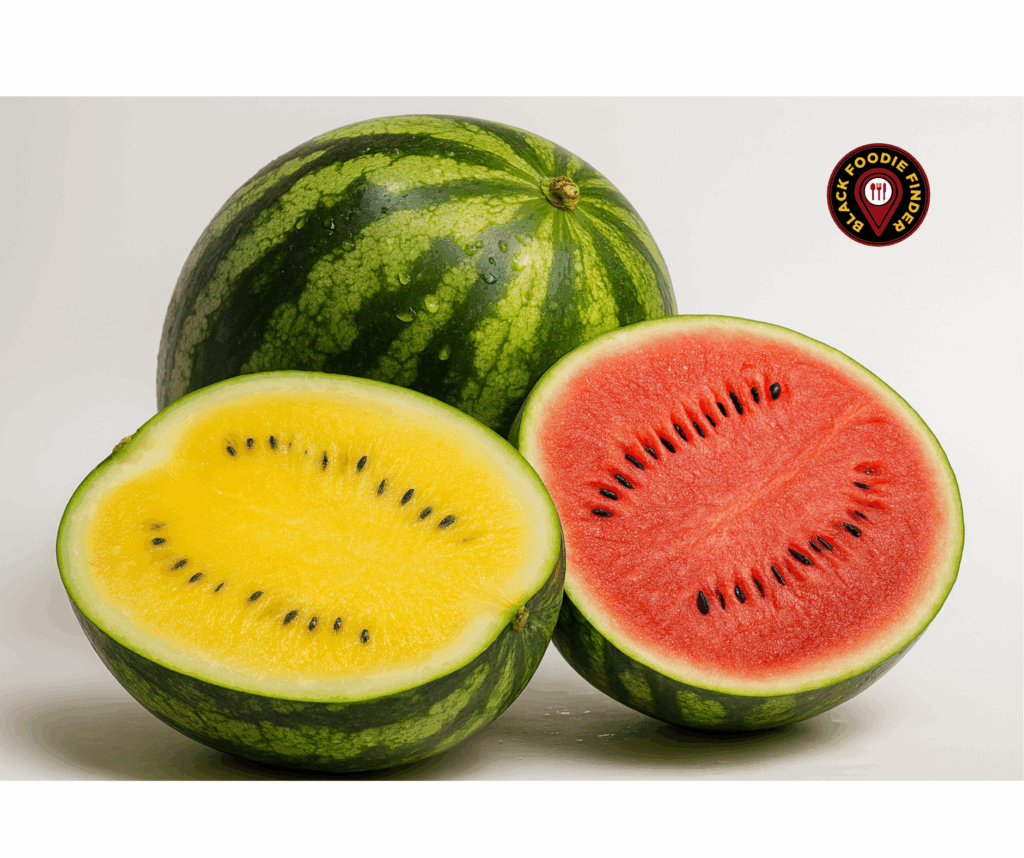
Look there’s nothing that screams summer like a good watermelon. You know that moment when you bite into a slice, the juice runs down your chin, and you’re like: “Okay, this is it.”
But real talk, finding a good one at the store can be tricky.
We’ve all been burned by watermelons that looked promising but tasted like water with a hint of disappointment. So we did our homework, tapped in with folks who know their fruit, and figured out what actually works.
Because life’s too short for bad watermelon.
Here’s what we learned about picking the good ones—every single time.

The Real Deal on Watermelon Shopping
That Yellow Spot is Everything
First things first—flip that watermelon over. See that patch where it was resting on the ground? That’s called the field spot, and it’s your best friend. You want it to be a creamy yellow—almost buttery looking. If it’s white or barely there? That melon was picked too early. It happens.
The Knock Test Actually Works
I used to think this was just something old folks did for show, but nah—it’s legit. Give it a good tap with your knuckles. A ripe watermelon should sound hollow, like knocking on a door. If it sounds flat or dull, keep it moving.
Those Ugly Brown Lines? Keep Them
You know those rough, webby scars on the skin? Don’t be scared off. They’re called sugar scars—proof that bees were pollinating that fruit like crazy. More bee action usually means a sweeter watermelon. Sometimes the best things don’t look perfect.
Shape Matters More Than You Think
Here’s something surprising: round watermelons tend to be sweeter. The long oval ones? They can be watery. Most people go for the biggest one they can find, but round and heavy is the move.
Pick It Up
If you’re comparing watermelons that look the same size, pick them up. The heavier one is going to be juicier. Yeah, your arms might get tired—but that’s the price of greatness.
What to Avoid
❌ Skip the Shiny Ones
If it’s gleaming under the store lights, leave it. Ripe watermelons have a matte finish. Shiny skin usually means it got picked too soon.
❌ Soft Spots and Weird Colors
This one’s obvious—soft spots = bad news. Same goes for any discolored or dark patches. You want a watermelon with even color all over—whether it’s light green, dark green, or striped.
❌ Don’t Overthink It
A few scratches or surface blemishes? That’s just life. It won’t hurt the flavor. Keep it simple and trust the signs.
Your Shopping Game Plan
- Check the bottom first – Look for a creamy yellow field spot
- Give it a tap – Hollow = good
- Feel the skin – Dull finish, firm skin
- Go for round – Better than oval for sweetness
- Lift it up – Heavier = juicier
- Don’t worry about scars – Sugar webbing = sweetness
Honestly, once you know what to look for, picking watermelons gets way easier. Follow these tips and you won’t have to deal with disappointing fruit anymore.
Pro tip: Don’t toss your whole watermelon in the fridge right away. Let it sit at room temp until you’re ready to cut it. After slicing, store it in the fridge for up to 3 days—though let’s be real, it probably won’t last that long.
This summer, you don’t have to guess anymore. You got this.
About BlackFoodie.com We’re here for the culture and the food that brings us together. From family recipes to street food favorites, we keep it real about what we love to eat.
Follow us @blackfoodie.com for more food tips that actually work.